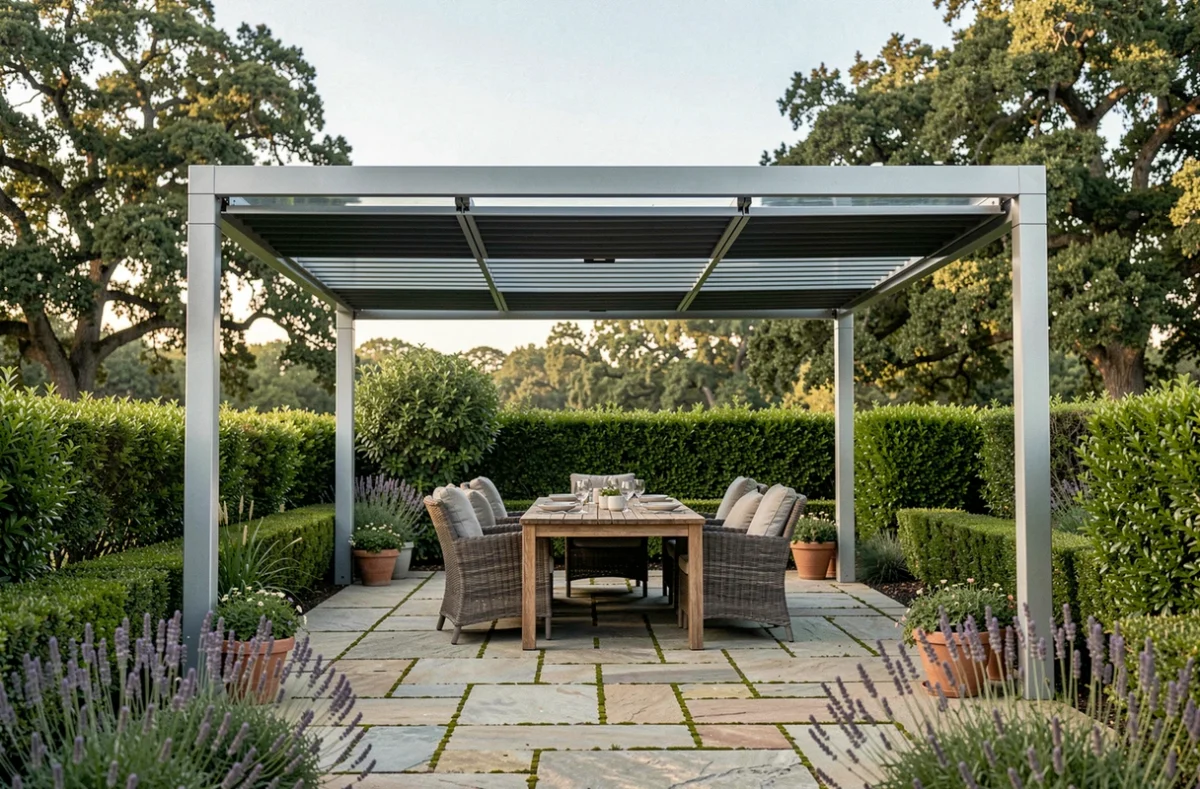
A bioclimatic pergola is a structure with adjustable slats that regulates light, ventilation, and protection from rain under one roof. Choosing a suitable model relies less on aesthetics and more on often underestimated technical constraints: access to the motor for maintenance, administrative status based on the footprint, and the structure’s behavior in the wind.
Footprint and urban planning permission: the framework to check before any purchase
Before comparing models of bioclimatic pergolas, the first question concerns the right to build. The urban planning permission depends on the footprint, not the type of slats. Generally, a prior declaration is required for areas between 5 and 20 m², and a building permit is needed beyond this threshold.
For a pergola attached to the house, the threshold may vary in urban areas covered by a local urban plan (PLU). The distinction can sometimes be subtle: a structure open on at least one side may require permission without generating a development tax, as this tax applies to enclosed and covered spaces exceeding 1.80 m in height.
A common pitfall: the later addition of glazing, vertical blinds, or sliding panels on the facades. The town hall may then classify the installation as a conservatory, which alters the floor area considered and the administrative obligations. It is better to anticipate these closures right from the submission of the file, even if their installation is planned for later. The professionals listed on need-sun.fr can provide guidance on these compliance issues before placing an order.
Maintenance of the motor and slat rotation mechanism
The motorization is the component that determines the daily comfort of a bioclimatic pergola. The adjustable slats pivot thanks to a motor housed within the structure, typically inside a post or a beam. What distinguishes a good model from a problematic one is the ability to access the motor without disassembling the structure.
On some entry-level pergolas, the motor is embedded in a welded post. In case of a breakdown, intervention requires cutting the aluminum, which damages the finish and complicates restoration. In contrast, manufacturers that provide an access hatch or a removable post allow for replacement in less than an hour.
Robustness of the rotation mechanism
The adjustable slats endure mechanical stress with each maneuver. The rotation mechanism (linkages, gears, or cables) must withstand thousands of cycles without excessive play. A concrete point of verification: ask for the specific warranty on the rotation mechanism, distinct from the structural warranty.
- An accessible motor without disassembly reduces maintenance costs over the pergola’s lifespan
- Stainless steel linkages resist corrosion better than galvanized steel, especially in coastal areas
- A degree-precise rotation control allows for fine adjustment of ventilation and shading according to the sun’s path
Wind and snow resistance: the structural parameters of an aluminum pergola
Wind and snow safety is a technical criterion to check on the product sheet. Bioclimatic pergolas made of aluminum display standardized resistance classes. A model designed for flatland exposure may not be suitable for a garden at altitude or in a wind corridor.
Some manufacturers integrate an anemometric sensor that automatically closes the adjustable slats beyond a certain wind threshold. This device protects the structure, but it is essential to verify that it remains manually disengageable in case of a power failure. Without this option, the slats remain stuck in the closed position until a technician intervenes.
Rainwater drainage
When closed, the slats form a watertight roof. Water must drain towards gutters integrated into the posts. Poorly sized gutters can cause overflow during heavy showers, leading to streaks on facades or garden furniture.
Check the diameter of the downspouts and the presence of an overflow system. For an attached pergola, connection to the house’s drainage network should be planned from the installation.
Attached or freestanding pergola: which model to choose for your garden
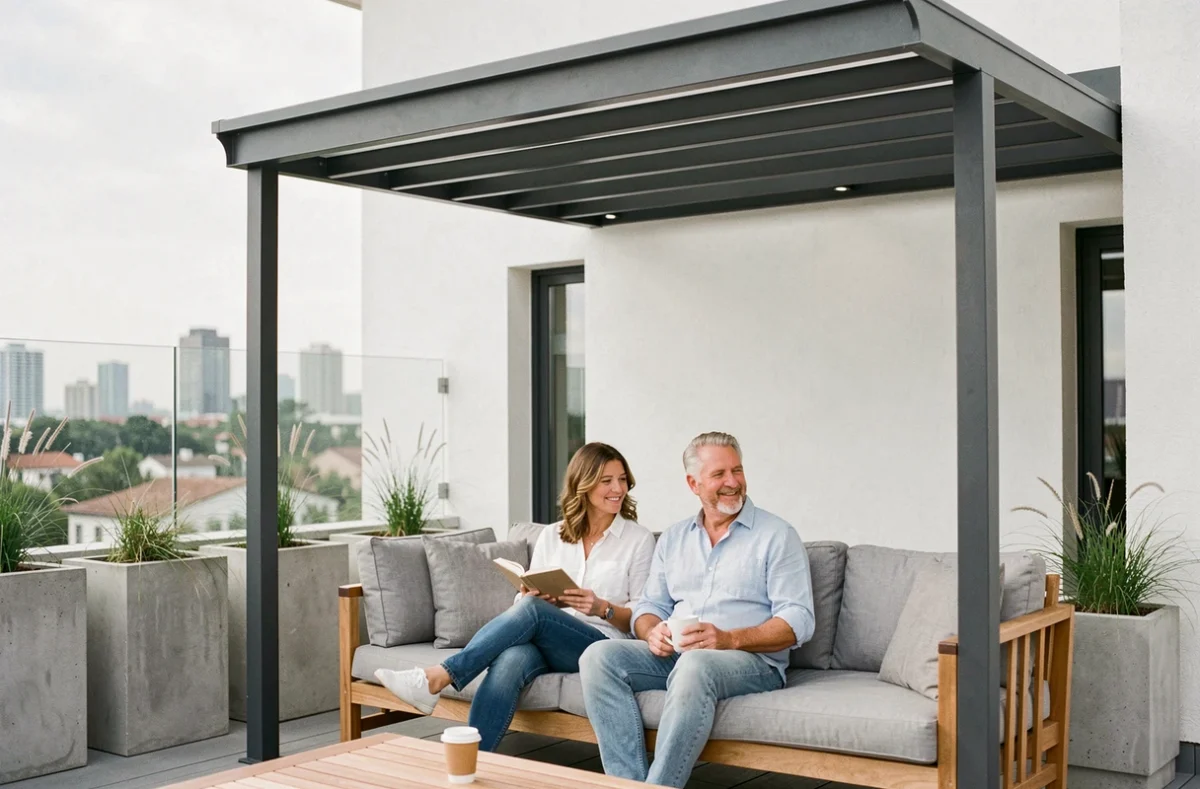
The attached pergola is fixed against a wall of the house, which reduces the number of posts and creates continuity between the interior and the outdoor space. It is suitable for adjoining terraces and easily integrates with existing joinery (large windows, French doors).
The freestanding pergola, supported by four independent posts, can be installed anywhere in the garden. It offers more freedom of placement but requires suitable foundations (concrete footings or foundation screws) and an underground electrical connection for motorization.
- Attached pergola: prefer a south or southwest orientation to increase control of sunlight exposure with the adjustable slats
- Freestanding pergola: consider the natural shading from trees and neighboring buildings, as the structure does not benefit from the protection of a wall
- In both cases, ensure sufficient spacing between the posts to avoid obstructing movement around the furniture
The choice between these two configurations also has an administrative impact. An attached pergola may fall under a different authorization threshold in PLU areas, which sometimes simplifies the procedures for modest surfaces.
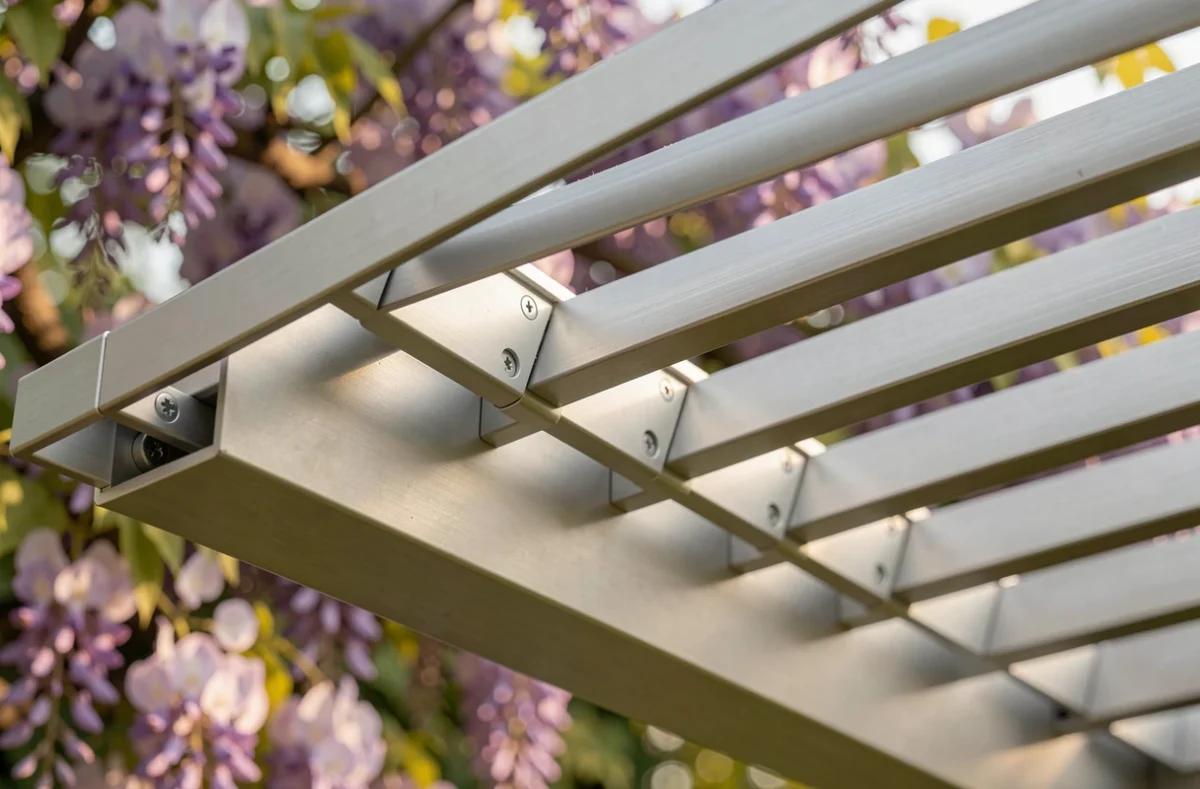
Lastly, a point rarely mentioned in catalogs: the quality of the finish at the junctions between the slats and the frame determines the actual watertightness of the pergola. A simulated rain test, offered by some installers before the completion of the work, remains the most reliable test to validate the choice of model.