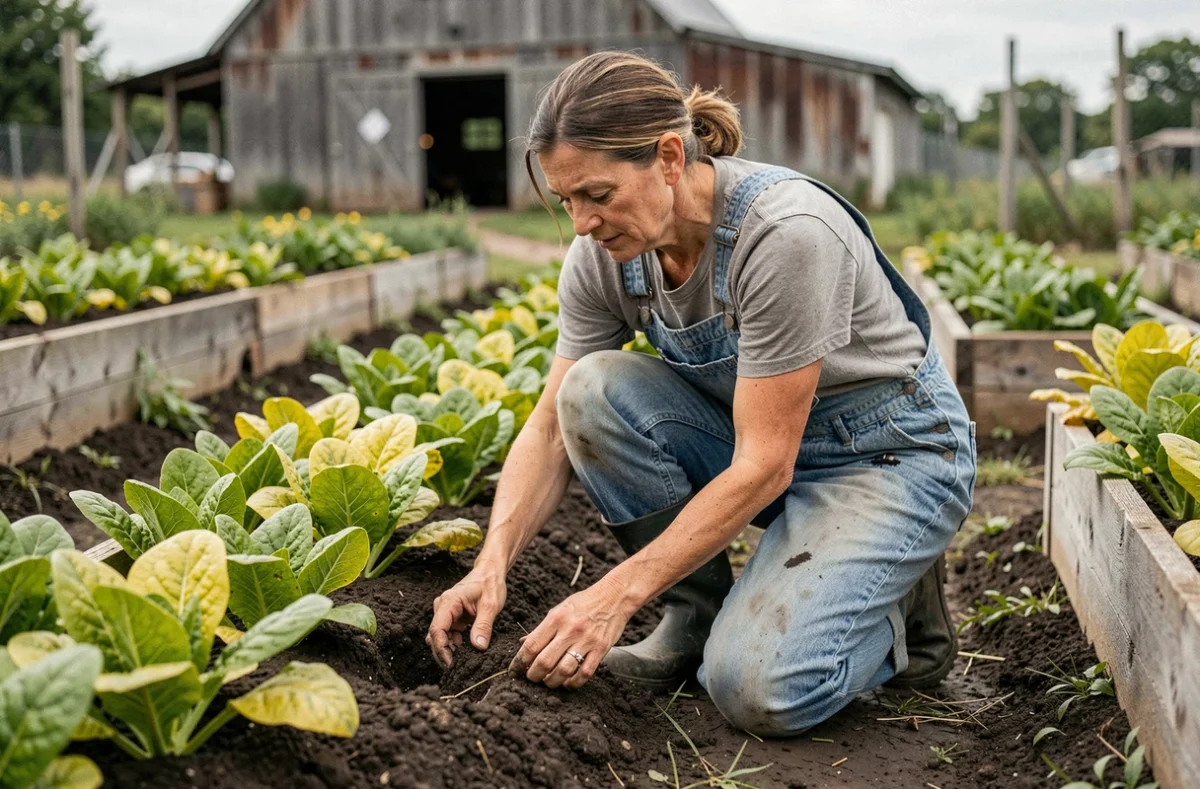
Decree No. 2026-829 of August 28, 2026, changes the game for anyone involved with hedge lines in agricultural or landscaping contexts. By unifying up to thirteen previously distinct regulations under a single declaration or authorization regime, this text reconfigures land management practices at the parcel level. Sustainable agriculture and landscaping are no longer two parallel logics: they now share a common legal framework that requires simultaneous consideration of production, biodiversity, and landscape structure.
Unique hedge regime: what Decree No. 2026-829 modifies for planners
Before August 2026, destroying a hedge involved navigating procedures related to the environmental code, the rural code, CAP rules, and sometimes local urban planning regulations. This overlap discouraged compliance and made inspections difficult.
The unified regime introduced by the Agricultural Orientation Law of March 24, 2025, and operationalized by the decree of August 28, 2026, is based on a clear principle: any authorized destruction must be compensated by at least an equivalent linear length, accompanied by comparable ecological functionalities.
This obligation for functional compensation goes beyond mere metric ratios. The replanted linear must fulfill comparable roles in terms of biological corridors, windbreaks, or runoff water filtration.
For landscape professionals and operators, the direct consequence is an increased anticipation of projects. A land consolidation or agricultural building extension project now requires a unique file, submitted in advance, incorporating the diagnosis of the existing linear and the replanting plan. The resources available on agriculture-et-paysage.fr allow for the integration of agronomic and landscaping dimensions of these projects, which has become necessary under this new regulatory framework.
Landscape indicators of the European regulation on nature restoration
The European regulation on nature restoration places agricultural ecosystems at the heart of its obligations. Member States have submitted their draft national plans, and the selected indicators directly target the landscape structure of farms.
Three indicators must show an upward trend (at least two out of three):
- The grassland butterfly index, which reflects the quality of semi-natural habitats maintained within agricultural parcels and their edges.
- The organic carbon stock of cultivated mineral soils, directly linked to practices of ground cover, crop rotation, and soil tillage.
- The share of agricultural land occupied by landscape elements favorable to biodiversity (hedges, ponds, grassed strips, isolated trees).
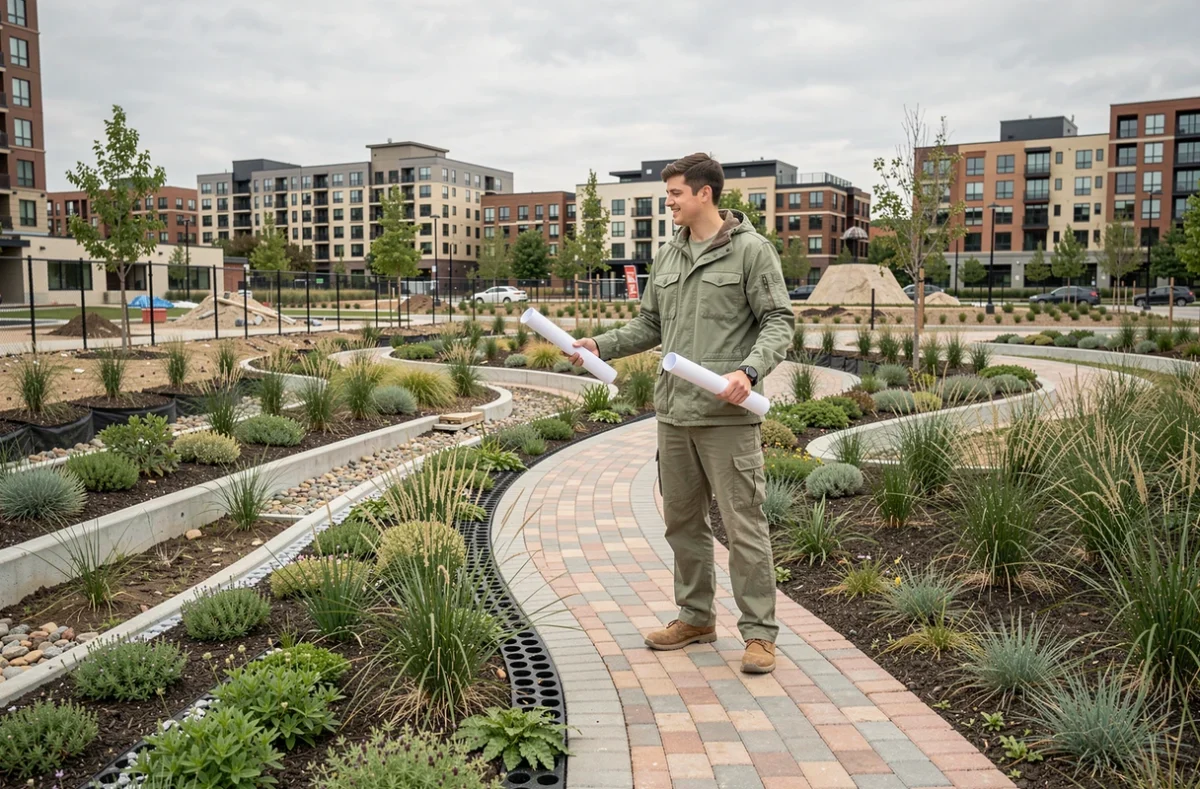
This third indicator is the one that most directly concerns landscape professions. It is no longer about designing green spaces disconnected from production, but about creating agroecological infrastructures integrated into the parcels. Landscaping becomes a lever for regulatory compliance for farms, not just an aesthetic service.
Discrepancy between obligations and implementation
Several Member States have submitted preliminary plans deemed incomplete by the European Commission. The compliance timeline creates tension between the stated objectives and the technical means mobilized on the ground. Consulting firms and landscapers have an interest in positioning themselves now to support the landscape diagnostics required by these plans, before the specifications become rigid.
Design of agricultural buildings and landscape integration
Mainstream articles rarely address the link between agricultural architecture and landscape quality. Livestock buildings, storage sheds, and methanization units profoundly alter the perception of a territory just as much as the enlargement of parcels or the removal of hedges.
A poorly sited agricultural building can fragment an ecological corridor just as much as deforestation. Orientation, volume, choice of cladding materials, and management of surroundings (vegetated swales, screen plantings) require joint work between architect, landscaper, and operator.
The trend toward farm enlargement amplifies this phenomenon. Increasingly large structures appear in landscapes historically composed of small built units. Without landscape prescriptions in local urban planning documents, the visual and ecological coherence of the territory rapidly deteriorates.
Vegetalization of surroundings and management of buffer zones
Buffer zones around agricultural buildings serve multiple functions when properly sized: filtration of rainwater loaded with organic matter, reduction of visual impact, maintenance of a microclimate favorable to beneficial organisms. Planting multi-layered hedges around the site, combined with grassed swales, is a proven technical response.
Management of these spaces cannot be considered at the terminal phase of the project. The most successful projects integrate the landscape plan from the architectural sketch, rather than as a last-minute dressing imposed by the building permit instruction.
Maintenance of hedges and hedgerow network: technical arbitrations at the parcel level
The hedgerow network is not just a line of vegetation at the edge of a field. Its functionality depends on precise parameters: root zone width, diversity of plant layers, and continuity of the linear across multiple parcels.
A monospecific hedge of thuja offers none of the ecological functions expected by the unique hedge regime. Regulatory compensation requires comparable functionalities, which directs towards local species, three-layer hedges (tree, shrub, herbaceous), and differentiated management of maintenance.
Parcel-level arbitration is often delicate. Removing a section of hedge to facilitate the passage of harvesting machinery may seem trivial, but it disrupts a corridor used by pollinators and pest predators. The agronomic cost of this disruption (increased pest pressure, heightened wind erosion) often exceeds the expected logistical gain.
Municipal or intermunicipal hedgerow management plans provide a relevant framework. They allow for reasoning about removals and replantings at a scale consistent with wildlife movements and the hydrological dynamics of the watershed, rather than parcel by parcel.
Sustainable agriculture and landscaping now converge around measurable obligations. The regulatory framework no longer allows for a choice between production and landscape: European indicators, the unique hedge regime, and the requirements for integrating agricultural buildings impose an integrated approach. Professionals who master this dual competence, agronomic and landscaping, will have a clear operational advantage in the coming years.